
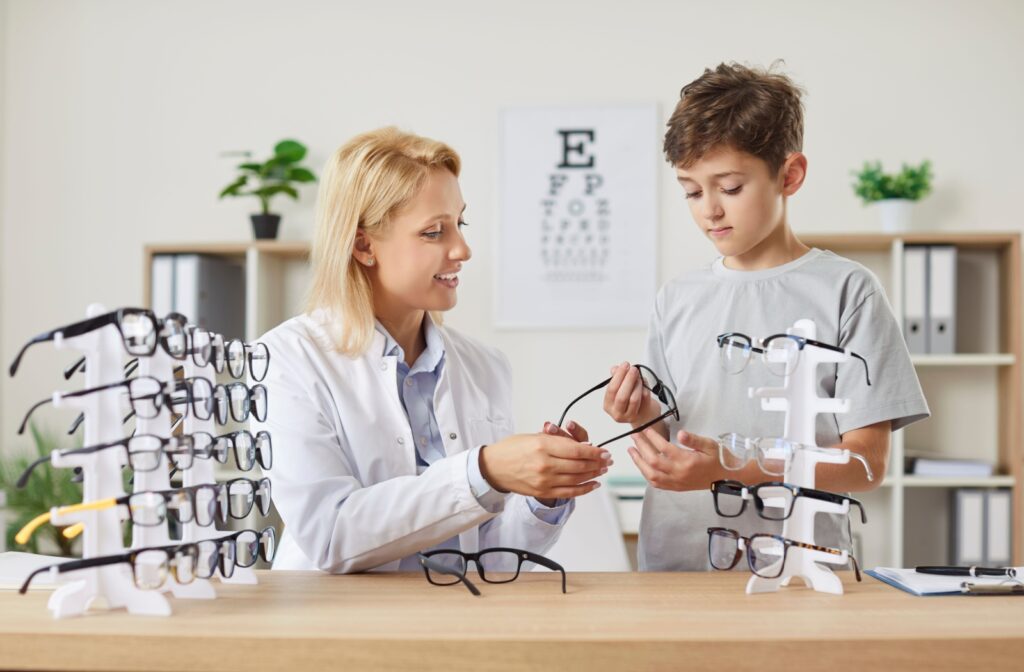
You may notice your child’s vision prescription gets a little stronger with every annual eye exam. This is a common concern for parents who visit Total Vision Ladera Ranch. The condition, known as myopia, often progresses throughout childhood, and you might wonder if there’s a way to slow it down. Exploring myopia control options can help protect your child’s long-term eye health.
Myopia control can and should begin as soon as your child is diagnosed with nearsightedness, regardless of their age. Starting early often provides the most significant long-term benefits for their vision.
Why Early Action Matters for Your Child’s Vision
What Happens When Myopia Progresses
When a child has myopia, their eye is growing slightly too long. This causes light to focus in front of the retina instead of directly on it, making distant objects appear blurry. As this progression continues, it can increase the risk of certain eye health conditions in adulthood.
The Goal of Myopia Control
Myopia control is not a method for reversing nearsightedness. Instead, the goal is to manage how it changes over time. It’s a proactive approach designed to help slow down the elongation of the eye during your child’s key growth years. Regular pediatric eye exams are the first step in monitoring these changes.
The Ideal Time to Start Myopia Control
Key Signs Your Child Might Need Support
A conversation about myopia management is appropriate whenever signs appear. These discussions are often prompted when:
- A child shows early risk factors, like a family history of nearsightedness
- You notice their prescription changes often, which is a good time to discuss different myopia treatments for your child
- They experience eye strain or frequent headaches
- Vision appears blurry when looking at faraway objects
- They squint to see distant objects
Why Younger Children Benefit Most
While it’s never too late to discuss options, starting myopia control at a younger age can be particularly effective. Myopia often progresses fastest between the ages of 7 and 10. Intervening early gives your child a greater opportunity to slow that progression and support their long-term eye health.
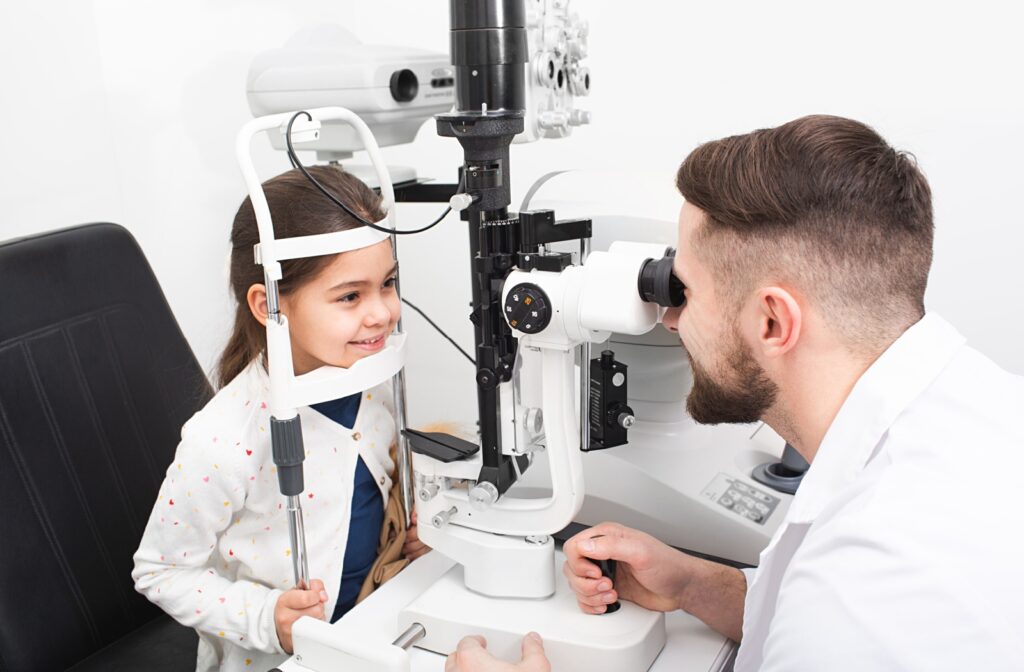
Common Risk Factors for Myopia in Children
Family History and Your Child’s Eyes
Genetics play a significant part in your child’s risk for developing myopia. If one parent is nearsighted, the child’s risk can triple. If both parents are nearsighted, that risk may be up to 6 times higher. Be sure to discuss your family’s eye health history during your child’s exam.
The Impact of Screen Time and Outdoor Time
Modern life involves a lot of close-up work, from reading to screen time, which can contribute to digital eye strain. At the same time, limited time spent outdoors is also linked to a higher risk of myopia. Encouraging your child to spend at least 90 minutes playing outside each day can be beneficial for their eyes.
Myopia Control Treatments for Kids and Teens
A Look at Different Options
There isn’t a single solution that works for every child. An eye care team can discuss several effective options to find a good fit for your family’s lifestyle and your child’s specific needs. Common treatments include:
- Specialized glasses: These lenses are designed with different focus zones to help slow down the signal that tells the eye to grow longer.
- Contact lenses: Options range from daily disposable soft contacts to overnight ortho-k lenses that gently reshape the cornea while your child sleeps.
- Atropine eye drops: A low-dose prescription drop used once a day can help relax the eye’s focusing mechanism to slow progression.
How Long Does Myopia Control Last?
When Does Myopia Usually Stabilize?
For most people, myopia progression naturally slows down in the late teenage years. Vision tends to become much more stable by the time a person reaches their early 20s. The myopia management journey is designed to last through these key developmental years.
The Importance of Ongoing Eye Care
Myopia control is a long-term partnership between your family and your eye doctor. It requires consistent follow-up appointments to monitor your child’s vision and adjust the treatment plan as needed. Our team in Ladera Ranch can guide you and your child through every step of the process.
We Are Here to Help
Your child’s vision is an important part of their overall health. Our Total Vision Ladera Ranch team is ready to care for your entire family and can answer your questions about myopia. Schedule a comprehensive eye exam today to learn more about your child’s options.