

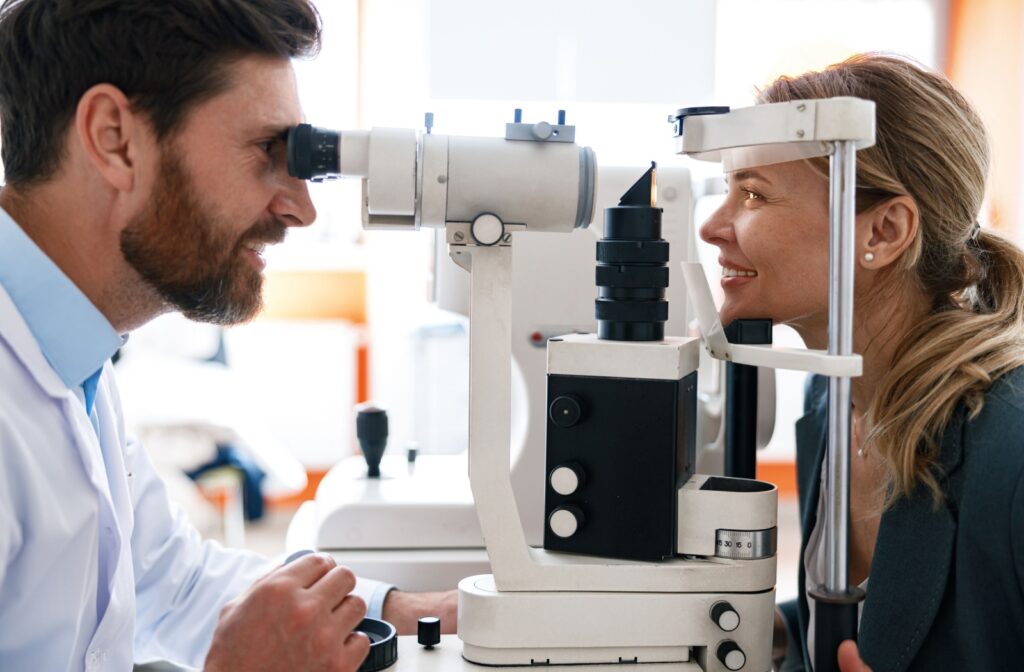
You may think an eye test is just about checking if you need glasses or contacts. In fact, however, your eyes are one of the few places where we can get a clear view of your blood vessels, nerves, and connective tissues without surgery.
This means that your eyes can show signs of health conditions from other parts of your body. A comprehensive eye exam is, therefore, a valuable check-up for your overall health, as it’s capable of detecting not only eye diseases, but also a range of other conditions, like diabetes and high blood pressure.
More Than Just Clear Vision
An eye exam does more than just determine your prescription. It’s also a preventive health screening. These check-ups can reveal early signs of various health issues, sometimes before you even notice symptoms. Early identification allows for prompt and more effective treatment.
How an Eye Doctor Views Your Health
During an exam, your optometrist uses diagnostic technology to look at the delicate structures inside your eye, including the retina and optic nerve.
The Connection Between Your Eyes & Body
The blood vessels in your retina are clearly visible during an exam. This gives your eye doctor a direct look at your circulatory health. Changes in the appearance of these structures can provide important clues about general health conditions.
Health Conditions an Eye Exam Can Uncover
Many people are surprised to learn what an eye doctor can see during a routine exam. Here are some common health conditions that are frequently identified by eye exams.
Diabetes
An eye exam can spot changes in the blood vessels of your retina, such as leaking or swelling. This can be an early indicator of diabetic retinopathy. Detecting these changes early is a key part of managing your health.
High Blood Pressure
An eye exam can also identify bends, kinks, or tears in the blood vessels of your eyes. These signs may be a result of high blood pressure.
High Cholesterol
Sometimes, a yellow or blue ring may appear around the cornea, which could point to high cholesterol. An exam can also reveal tiny deposits in the retinal blood vessels, often identified through retinal imaging.
Eye Tests & Brain Health
Your eyes are directly connected to your brain through the optic nerve. Because of this link, an eye exam can sometimes detect issues related to brain health.
The Optic Nerve & Brain Health
Swelling of the optic nerve can be visible during an eye exam. This can suggest increased pressure in or around the brain.
Other Neurological Signs
Changes in your field of vision, pupil size, or even eye movements can also provide clues to your health. This is because your eye movements are controlled by your cranial nerves and muscles, so problems with these structures affect your sight.
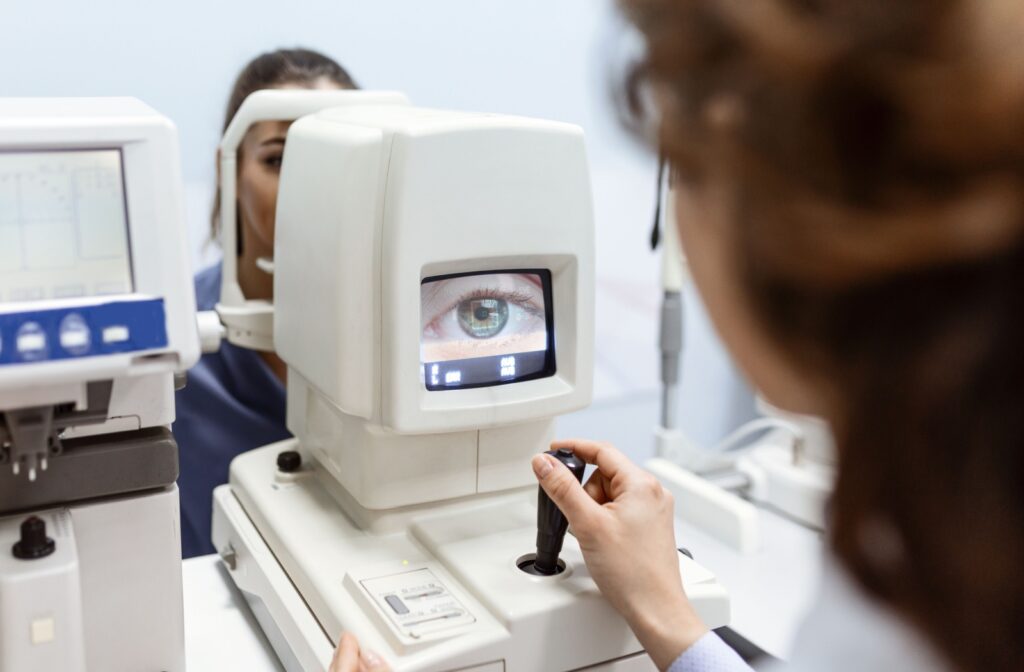
Common Eye Conditions to Check
Of course, a primary focus of an eye test is your eye health itself. Regular exams are key to spotting common eye diseases. Many of these can develop without early symptoms.
Glaucoma
Glaucoma often has no early warning signs, which makes routine check-ups important. To look for glaucoma, we measure the pressure inside your eye and examine your optic nerve for changes.
Cataracts
A cataract is a clouding of the lens inside your eye. Cataracts can affect your vision over time, so regular monitoring is important.
Macular Degeneration
We also check for signs of age-related macular degeneration, a condition that affects your central vision. We do this by looking for changes in the macula, a small area at the back of your eye responsible for sharp, detailed sight.
Why Regular Exams Matter for Your Family
From children to seniors, everyone benefits from routine eye care. A regular visit to your eye doctor in Ladera Ranch helps protect your family’s vision and overall health. It’s a simple, proactive step for everyone in your household.
Eye Care for Children & Adults
For children, regular eye exams are important for healthy development and success in school. For adults, these exams help maintain clear vision. They’re also a way to detect health issues early.
Red Flags for Your Eyes
While routine exams are important, you should schedule a visit with your optometrist if you notice any new or sudden symptoms. Pay particular attention to the following:
- Sudden blurry vision
- Flashes of light
- An increase in “floaters”
- Eye pain or redness
- Light sensitivity
Scheduling a comprehensive eye exam is a simple step toward taking care of your health, as it provides peace of mind and helps you maintain clear sight for years to come. Our team at Total Vision Ladera Ranch is ready to care for your entire family, so come and see us today.