

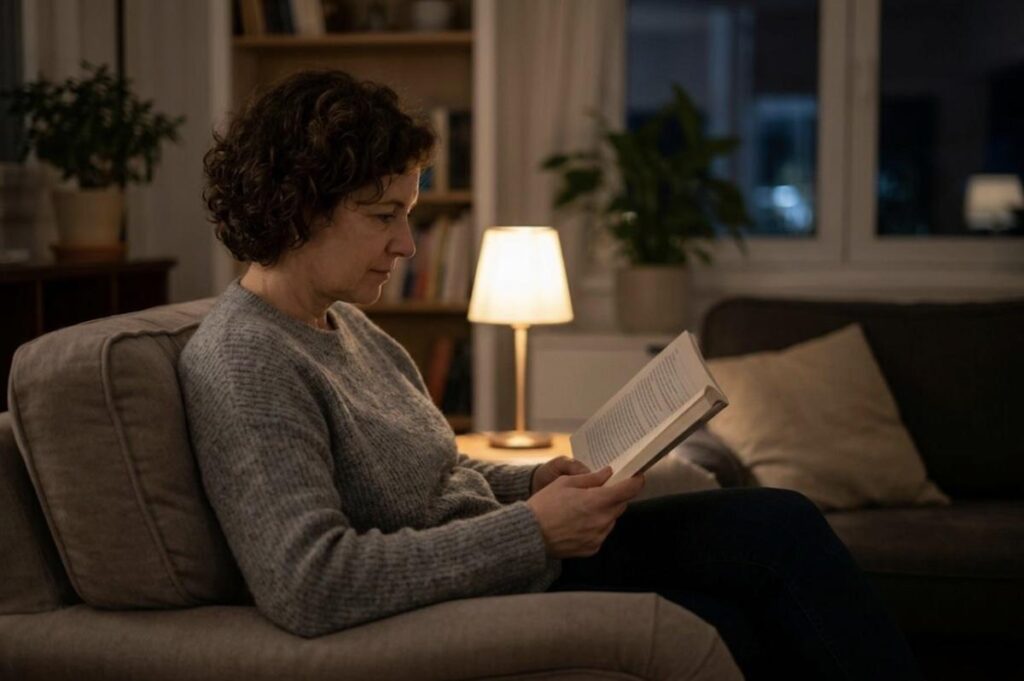
Many of us enjoy curling up with a good book right before bed, relying only on a small lamp’s soft glow. Parents often cautioned against reading without proper lighting, insisting it would ruin your vision. Let’s set the record straight: reading in dim light doesn’t cause permanent damage to your eyes.
However, doing so can lead to temporary discomfort and eye fatigue. Your eyes are adaptable organs that adjust to different lighting conditions. A dark room forces your eye muscles to exert more effort to focus on the words in front of you. This extra effort leaves your eyes feeling tired. Turn on a lamp and give your eyes the light they need.
The Truth About Low Light and Your Eyes
Reading a good book in a dimly lit room can feel incredibly cozy before bed. Fortunately, this low light doesn’t create permanent alterations to your eye structure. Your eyes are built to handle various environments without experiencing long-term changes.
The discomfort you feel after reading in the dark is completely temporary. Your eye muscles simply get tired from working extra hard to process the low-contrast text. A quick rest can help your eyes recover their normal function quickly.
Pay attention to how your eyes feel and give them breaks when they feel heavy. Track vision adjustments over time by visiting your optometrist for a comprehensive exam. Schedule regular checkups to catch concerns early.
How Your Vision Adapts to the Dark
Your visual system makes automatic adjustments the moment you step into an unlit space. Your pupils naturally open wider to let as much light in as possible. This natural response helps you see objects when the lights go down.
This pupil dilation makes your eyes work harder to maintain a sharp focus on small text. Your eye muscles strain to keep words clear on the page, easily leading to a heavy feeling in your eyes. Turn on an overhead light to reduce this strain.
People tend to blink much less often when they concentrate on a task in a dim space. A normal blink rate keeps a fresh layer of tears spread across your eye surface. Staring intently at a book or screen interrupts this natural moisture cycle.
This reduced blinking can leave your eyes feeling dry and scratchy. Without enough tears, the front surface of your eye loses its smooth protective coating. This dryness makes reading feel uncomfortable very quickly, which often mimics dry eye. Use artificial tears to restore moisture and find relief.
Managing Screen Time in Dark Rooms
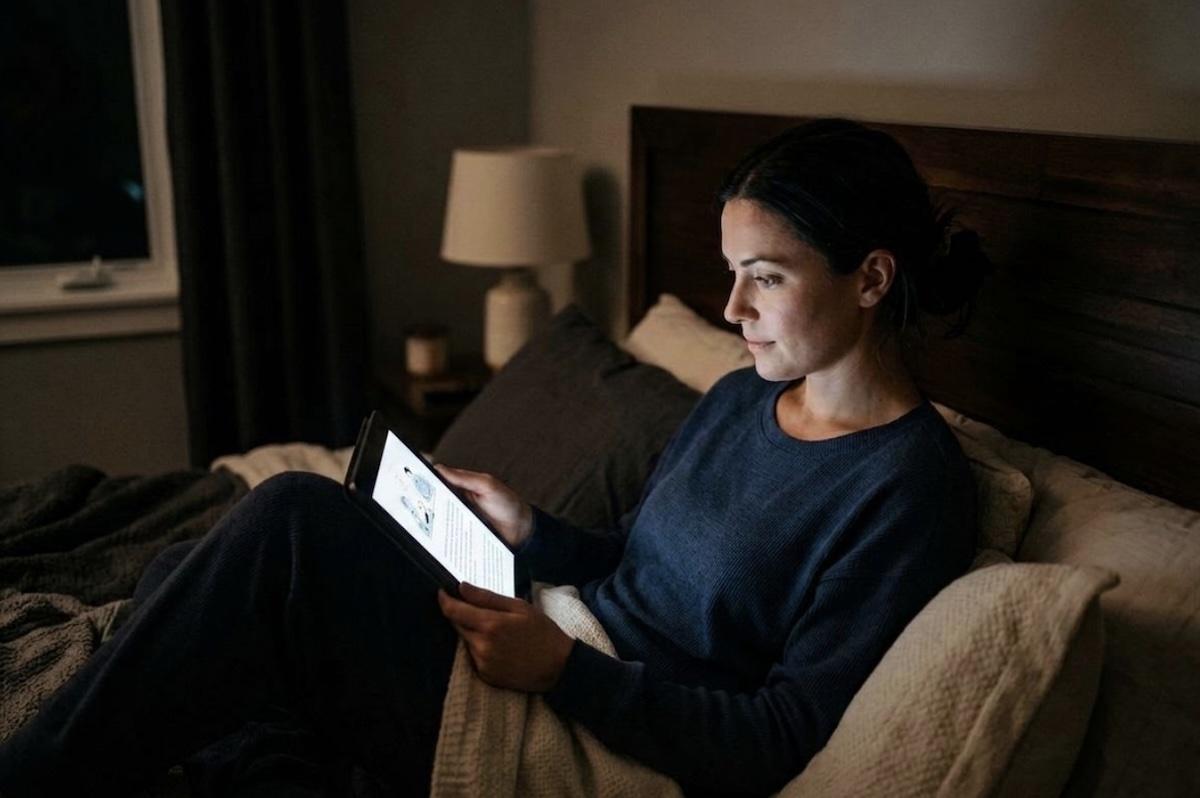
Looking at a bright phone or tablet in a pitch-black room forces your eyes to manage two extremes. Your central vision deals with the bright screen while your peripheral vision stays in the dark. This sharp contrast forces your pupils to make rapid adjustments.
These constant changes can tire out your eye muscles in a short amount of time. The bright blue light from devices also competes with the surrounding darkness. This combination frequently leads to quick eye fatigue during nighttime scrolling, which can contribute to computer vision syndrome.
Fix this imbalance by matching your room lighting to your screen brightness. Turn on a desk lamp to soften the contrast between your digital device and the room. Your eyes don’t have to work as hard to adjust when the lighting is even. Put your device down, close your eyes for a few minutes, and let your eye muscles relax. Adopt this habit and keep your vision comfortable during late-night digital sessions.
Signs Of Tired Eyes
Reading in dim light can bring on a few noticeable symptoms. These physical signs let you know that your eyes need a break. You might notice these issues building up after a long reading session.
- Frequent headaches around the forehead or temples
- Blurry or double vision when looking at text
- Sore eyes that feel heavy or tender
- Dry eyes accompanied by an itchy sensation
These signs usually fade away once you stop reading and rest your eyes. You can step away from your book or screen to find immediate relief.
Ways To Keep Your Eyes Comfortable At Night
You can easily modify your environment and habits to protect your visual comfort. Add a nearby lamp and transform your reading experience instantly. A soft light aimed directly at your book reduces the strain on your eye muscles. You can enjoy your stories much longer without feeling uncomfortable.
Switching to books with larger print can also help reduce eye fatigue. Bigger text requires less focusing power from your eyes. You can also increase the font size on your digital reader to make reading easier.
The 20-20-20 rule is a helpful habit for long reading sessions. You can look away from your book or screen every 20 minutes to give your eyes a rest. This short break resets your focus.
Prioritize Your Eye Health Tonight
Taking care of your vision means paying attention to the small details, from the lighting in your bedroom to the way your eyes feel after a long day. Small adjustments to your reading routine keep your eyes feeling fresh.
Total Vision Ladera Ranch has cared for families in the community since 2004. Contact our friendly team today to book your next visit and keep your family seeing clearly.