

Key Takeaways
- A comprehensive eye exam goes far beyond reading an eye chart.
- Many serious eye conditions show no symptoms in the early stages.
- Exams can detect signs of over 250 systemic health conditions through the eyes.
- Children, adults, and seniors can all benefit from regular, scheduled eye exams.
- Knowing what to bring and what to expect helps the appointment go smoothly.
You pass the vision screening at your kid’s school, or your annual physical, and everything seems fine. So why bother with a full eye exam? Because those quick screenings only check one thing: whether you can see letters on a chart from across the room. At Total Vision Ladera Ranch, we offer comprehensive eye exams for every member of your family, from toddlers to seniors.
A comprehensive eye exam checks the full health of your eyes, not just how sharp your vision is, and it can detect signs of conditions that have no obvious symptoms until damage has already occurred.
A Routine Eye Check vs. A Comprehensive Eye Exam
A basic vision screening gives a pass or fail on how clearly you can see. That’s it. A comprehensive exam goes much deeper, looking at how your eyes move, how pressure builds inside them, how your retina (at the back of your eye) looks, and how well both eyes work together as a team.
Many conditions, including glaucoma and early macular degeneration, don’t cause pain or obvious vision changes in their early stages. A comprehensive exam is often the only way to detect them before they progress.
What to Bring and How to Prepare
Health History and Medications
Come prepared with a list of any medications, supplements, or eye drops you’re currently taking. Some medications affect eye pressure or the health of the retina, so this information helps your eye doctor get a complete picture.
Your family history matters too. If a parent or grandparent has had glaucoma, cataracts, or macular degeneration, let our team know. That history can shape which tests get prioritized and how closely certain areas are monitored. You can also save time by completing your patient forms before your appointment.
What to Expect When You Arrive
Plan for the appointment to take anywhere from 30 to 90 minutes, depending on which tests are included and whether your pupils need to be dilated.
Dilation drops take about 20 to 30 minutes to work and can temporarily blur your near vision and make your eyes sensitive to bright light. Dilated eye exams help the eye doctor to detect eye diseases early, often before any symptoms appear. If dilation is part of your exam, consider bringing sunglasses and arranging a ride home if driving feels uncomfortable afterward.
The Tests in a Comprehensive Eye Exam
Vision and Refraction Tests
The eye chart test measures visual acuity, how clearly you can see at different distances. From there, a refraction test figures out whether you need glasses or contacts and, if so, what prescription would give you the clearest vision. The eye doctor uses a series of lens comparisons, asking which option looks sharper, to dial in the right correction.
Eye Health and Pressure Checks
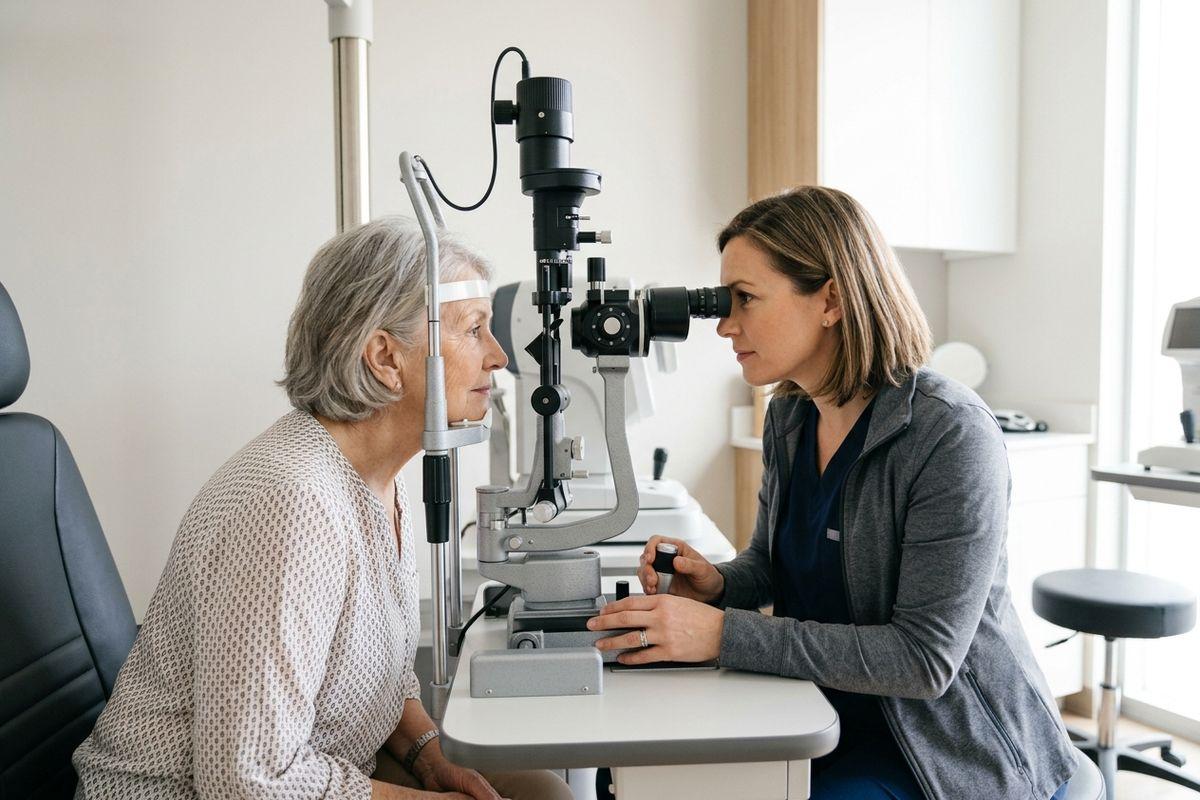
Tonometry measures the pressure inside your eyes. Elevated pressure can be a sign of glaucoma, even when you feel no discomfort at all. A slit-lamp exam uses a focused beam of light and magnification to examine the eyelids, cornea (the clear outer layer of the eye), lens, and iris (the colorful part of the eye) up close, checking for irregularities that wouldn’t be visible otherwise.
Eye Coordination and Field Tests
Ocular motility tests check how smoothly your eyes move and whether they work together properly. When they don’t, it can contribute to eyestrain, headaches, or double vision.
A visual field test maps out your side vision. This matters because certain conditions, including glaucoma, affect the edges of your vision before the center is affected.
What the Exam Can Reveal Beyond Your Vision
Eye Conditions Caught Early
A retinal exam can reveal damage associated with diabetes or high blood pressure, sometimes before you’ve been diagnosed with either condition. Changes in blood vessels, swelling, or spots on the retina all tell a story about what’s happening throughout the body. Our team offers diabetic eye exams as part of their care for patients managing diabetes.
Glaucoma, cataracts, and macular degeneration are often more manageable when caught in their earlier stages. Regular exams give the eye doctor a baseline to compare against over time, making changes easier to spot. The team diagnoses and manages eye disease for conditions like these as part of ongoing care.
Whole-Body Health Signals
The eyes are one of the few places in the body where blood vessels can be viewed directly, without surgery or invasive equipment. That makes them a valuable window into overall health. A comprehensive eye exam can flag signs associated with more than 270 systemic conditions, from thyroid disease to certain autoimmune conditions.
Catching those signals early opens the door to follow-up care with the right providers before a condition gets harder to manage.
How Often Your Family Should See an Eye Doctor in Ladera Ranch
Recommended Frequency by Age
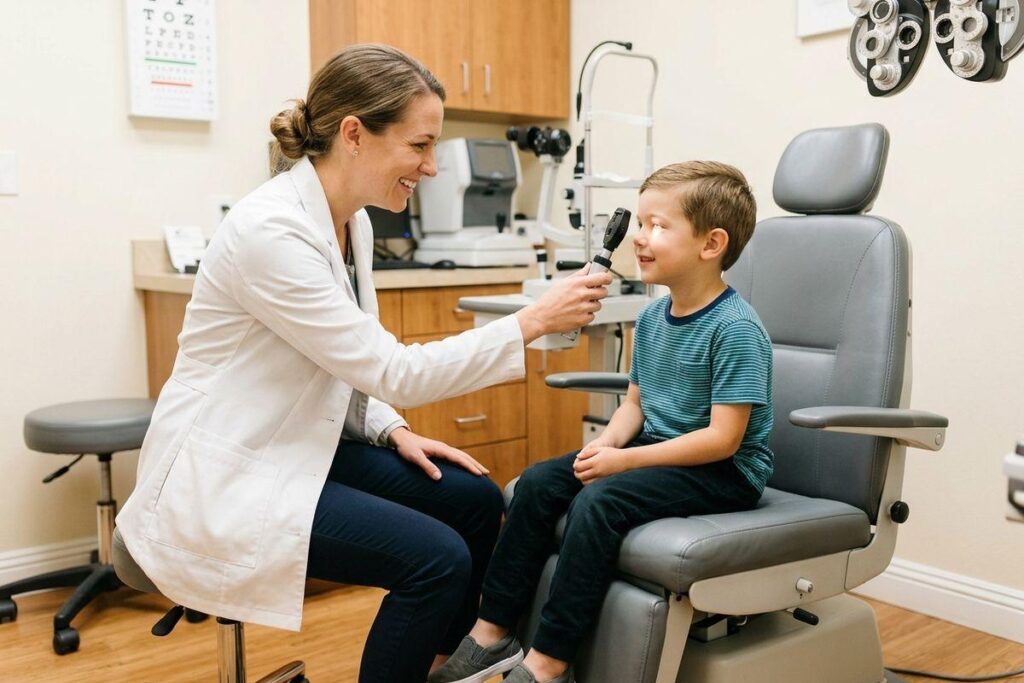
Children benefit from eye exams starting young, well before school age, because vision problems can quietly affect learning and development. Many kids don’t know their vision isn’t normal because they have nothing to compare it to. Regular exams help catch issues like amblyopia (lazy eye) or myopia early, when there are more options available to address them. The team offers myopia control for children whose nearsightedness is progressing.
Healthy adults are generally recommended to have an eye exam every 1–2 years, but your eye doctor can recommend a more specific schedule. As you age, the risk for glaucoma, cataracts, and macular degeneration increases, making consistent monitoring more valuable over time. Adult and senior eye exams are available and tailored to the specific concerns that come with each stage of life.
When to Schedule Sooner
Don’t wait for the annual reminder if something feels off. Certain signs are worth addressing promptly, including:
- Frequent headaches or eye strain that don’t have an obvious cause.
- Blurry vision, especially if it comes and goes or affects only 1 eye.
- Noticeable changes in how you see colors, contrast, or light.
Schedule Your Eye Exam
Our eye doctor in Ladera Ranch has served this community since 2004, caring for patients at every stage of life. If it’s time to schedule your family’s next comprehensive eye exam, our team at Total Vision Ladera Ranch is ready to help you get started. Book your appointment today.